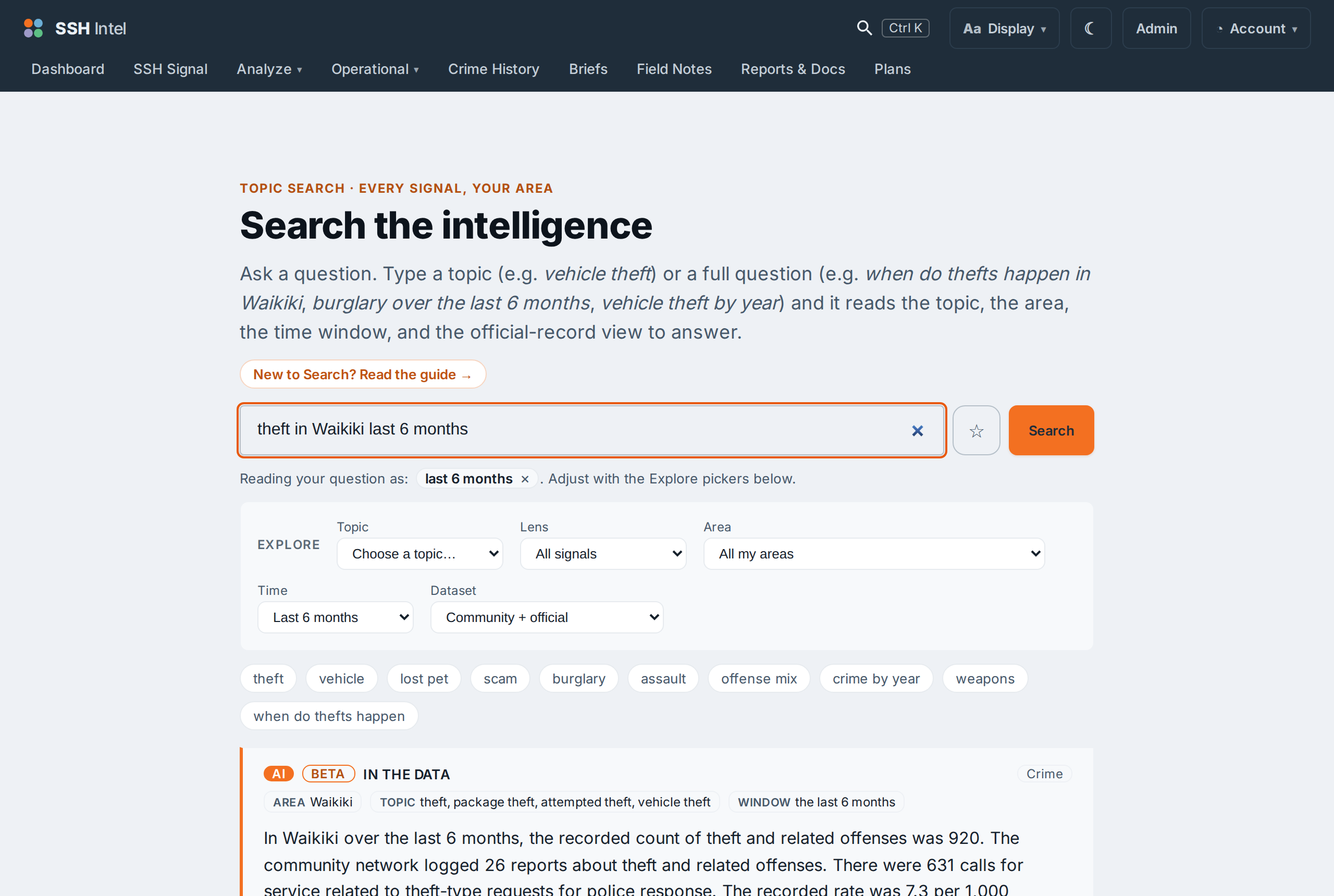
Search is the fastest way to get an answer. Type a topic or a full question. The tool works out the topic, the area, and the dates, then writes back a short answer built only from the recorded numbers.
How to ask
You can type a bare topic ("vehicle theft") or a full question. The tool understands area names, common misspellings of big places, and dates written in plain English. All of these work:
- burglary in Kailua last 6 months
- when do thefts happen in Waikiki
- vehicle theft by year
- how does Kapolei compare to the Oahu average
- car break-ins near Ala Moana
Checking how it read you
Under the box, "Reading your question as" shows the dates and topic the tool understood. If it read you wrong, change the Explore pickers just below (Topic, Lens, Area, Time, Dataset), or rephrase.
The answer
The numbers in the answer are counted by the system, never made up: the count, the rate per 1,000 people, how it compares with the Oahu average, and any notes you need to read it. Only the wording is written by AI, which is why the summary carries an AI · BETA tag.
What your plan searches
Search is on every plan, and it answers only for your plan's areas and signals:
- Every plan: police records, community reports, community attention, and the long FBI and state record for Oahu.
- District and higher: also calls to police, traffic, and weather.
- Field Note: the months your notes cover.
Ask about an area or a source outside your plan and the answer says so, rather than showing a zero.
When a search declines
Two cases. If your question asks for a ranking of places, a safety verdict, or a prediction, the tool declines on purpose. If too few records match to show them without risking someone's privacy, it holds the answer back and offers longer dates to try. Both are covered in Why did my search decline.
Last updated 2026-09-30 HST